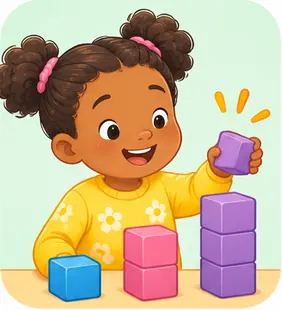
Numberblocks MathLink Cubes 1–10
Example from Learning Resources UK
Colourful interlocking blocks let children build, compare and explore quantities physically.
How you might use it: Build small groups and compare what more, fewer and the same can look like.
No-cost alternativeUse large blocks or cups to compare groups of one, two and three.
View at Learning Resources UK (opens new tab)Super Sorting Pie
Example from Learning Resources UK
Colour sorting, grouping and make-believe food play in one open-ended set.
How you might use it: Explore sorting by one quality at a time before adding counting.
No-cost alternativeSort large safe items at home by colour, size or shape.
View at Learning Resources UK (opens new tab)03Pictures & playful matching
Shopping List Game
Example from Orchard Toys
A familiar-picture matching game that can be shortened, adapted or played without competition.
How you might use it: Match items and notice how many are on a list through make-believe play.
No-cost alternativeMake a picture shopping list with drawings or food packaging images.
View at Orchard Toys (opens new tab)Numberblocks early-maths collection
Example from Learning Resources UK
Browse different counting and quantity toys, choosing only those that fit a child’s interests and abilities.
How you might use it: Browse other playful number choices for the child’s current stage.
No-cost alternativeSing number rhymes with household blocks, fingers or soft toys.
View at Learning Resources UK (opens new tab)